Reading the scripture texts appointed for today reminded me
that Biblical faith paints on an outsized canvas. Its claims are astonishingly large in scope,
and this is true right from the very first words of the Book of Genesis, the
opening words of the Bible. Walter
Brueggemann has characterized the creation story of Genesis as among the most
important, best known, and most frequently misunderstood scripture texts. I would have to agree with him. I think what we tend to miss in reading this
text, and Biblical faith as a whole, it the sense of sheer wonder that it is
meant to evoke.
The Bible is continually pointing us back to our own
experience of wonder, and the creation story is the first and clearest case in
point. It is simply wonder-ful. It reminds us of what Annie Dillard describes
so well in her book, Pilgrim at Tinker
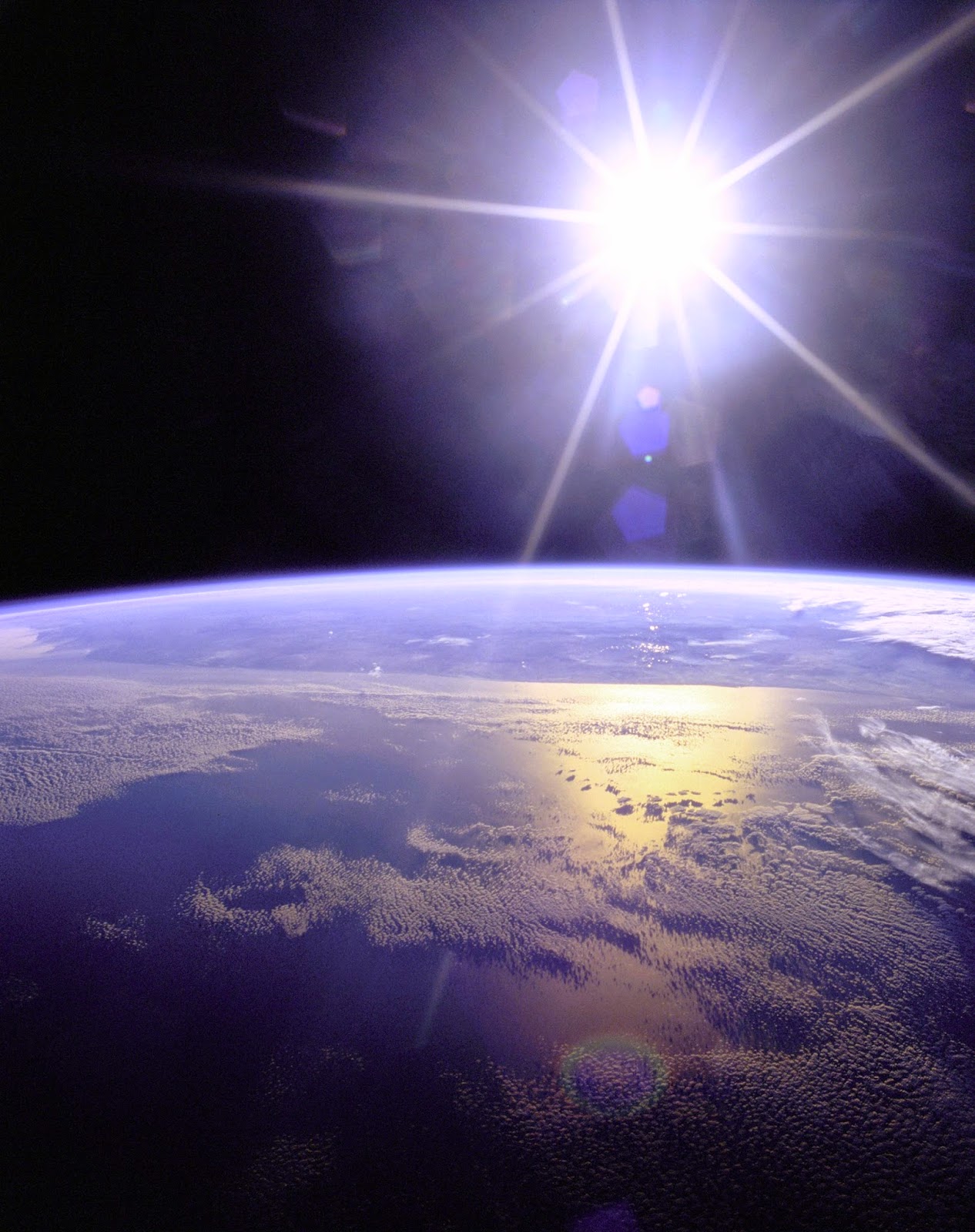
Creek: “The extravagant gesture is
the very stuff of creation. After the
one extravagant gesture of creation in the first place, the universe has
continued to deal exclusively in extravagances, flinging intricacies and
colossi down aeons of emptiness, heaping profusions on profligacies with ever
fresh vigor. The whole show has been on
fire from the word go!”[1]
The Bible opens with a hymn of wonder. The first part of Genesis, chapter 1:1
through chapter 2:4, is a liturgical text, created by Jewish priestly scribes
living in exile in Babylon during the sixth century before Christ. While it draws from ancient Mesopotamian and
Egyptian cosmologies, it is not a mythic text per se. It does not deal with the eternal structures
of the cosmos. It is certainly not a
scientific text, concerned with how the world came to be. It takes the form of doxology, a hymn of
praise to the Creator who creates Creation.
It is a proclamation of faith.
What, then, does this faith
affirm? It proclaims the intrinsic and
irrevocable relationship between the Creator and the Creation at the heart of
reality. Neither can be understood
without the other. The Creation is not
accidental or aimless, but exists by the will of God and develops according to
God’s intention. God is revealed in
Creation as One who delights in its beauty, bestows upon it his blessing, and
promises to bring it to its fulfillment.
Notice how the relationship
between the Creator and Creation is described in this hymn. There is a certain ambiguity in the Hebrew of
the opening verses of Genesis that is illuminating, but difficult to capture in
English translation. The conventional
translation is the familiar, “In the beginning, God created,” an absolute claim
for creation as God’s action. But it can
also be rendered, “When God began to create,” a dependent clause closely
related to what follows and emphasizing creation as an ongoing action.
What follows is the description of
an already existing chaos in which a wind from God vibrates over the
waters. Then God speaks and Creation
begins to emerge out of chaos. It seems
to me that this ambiguity is a fortuitous, if not intentional, interpretative
clue. God is both Creator in the sense
of absolute Source of all that is, but also is Creator in the sense of
continuing to work with the chaos of an emergent universe to make it a
Creation, a place of order, bounty, and awesome wonder.
Israel’s theologians in exile
proclaim faith in the power of God in the face of the power of the Babylonian
empire. In the midst of their forced
relocation, cultural disorientation, economic insecurity, and tragic loss, the
priestly authors of the creation hymn are speaking a word of reassurance to
their fellow exiles. God is still the
Creator and God is still working with and through the chaos of the world to
bring it – and us – to the fulfillment God intends.
What is more, these theologians
affirm the graciousness of God whose power works by way of evocation. God’s Creative Word is a command exercised in
the form of an invitation: “Let there be
light.” This “letting be” is more than a
“causing to be,” implying spaciousness within the Godhead, a making room for
the Creation to emerge. This culminates
in the creation of the Human Being in the image of God, charged with
responsibility for the rest of the Creation.
The Human Being, which images God collectively as male and female, is
given both authority and freedom to exercise this responsibility.
So the Creator speaks, but the
Creation listens and is given space to respond to God’s gracious call. There is a certain tension here. The Creature can respond in ways that accord
with God’s will – or not. The Human
Being is called to be a partner with God in the care of Creation. God’s promise
to bring the creation to its fulfillment is brought into question. Will God be faithful to the promise? Will Human Beings be faithful in their
response? The stage is set for the
Biblical drama that will unfold and that enfolds us.
Walter Brueggemann’s brilliant
commentary on Genesis captures well this tension: “Sin is only and always a resistance to God’s
gracious will. It is the compassion of
God which makes sin possible . . . God’s sovereignty is not yet fully visible. Creation is not yet fully obedient . . . But
the narrative lives in hope.”[2]
There is tension here, but also
the grounds for genuine hope. Not only
is God the Creator, the Creature is free within the limits of finitude. God doesn’t simply command, but invites and
blesses, working with the chaos of the world and the willful resistance of the
Human Being to bring Creation to its fulfillment. Israel’s theologians are whispering to their
fellow exiles and to us, “No matter how bad it gets, God is painting on a much
bigger canvass than the Babylonian empire.
We have some room to maneuver and trust that God will do for us what we
cannot do for ourselves. Look around
you. The Creation is still pretty
amazing. The whole show has been on fire
from the word go!”
In the confusion and loss of our
lives, Israel’s theologians invite us to look again at the big picture; not to
deny the reality of suffering – the chaos is really there – but to see it as
part of a larger work in progress. Will
we allow ourselves to be consoled and empowered by continually renewed
wonder? Might it not be possible for us
to expand our vision beyond our narrow preoccupations, however pressing they
may seem? Can we hear God’s creative Word
anew and reclaim our vocation to care for Creation as bearers of God’s
image? “The creation of the world is not
only a process which moves from God to humanity” writes Nicolas Berdyaev, “God
demands newness from humanity: God
awaits the works of human freedom.”[3]
Many years ago, my spiritual
director at the time turned the tables on me by asking, not if I trust God, but
rather, “Do you believe that God trusts you?”
God overcomes our resistance not by authoritarian commands or
punishments, but by embracing us in our finite but real freedom, by continually
awakening in us our desire for God and God’s gracious desire for the whole
Creation.
God’s Spirit just keeps blowing
over the chaos to see what it will stir up in us. In Baptism, we symbolically enter into the
chaotic waters to receive the gift of the Spirit’s power at work in us. Baptism is not an escape from the chaos, but
a commitment to enter it creatively, trusting that God’s Spirit is already
blowing there. Baptism is our way of
putting our money on God in the contest between God’s promise and the Creature’s
resistance. We also take the risk of
making promises in keeping with God’s promise, betting that God trusts us as
well. Some days it is hard to know whose
trust is more foolish – God’s or ours!
God all-bounteous, all creative,
Whom no ills from good dissuade,
Is incarnate, and a native
Of the very world he made.[4]
Christopher Smart’s poem reminds
us that God bet the whole farm by becoming human. However risky it is to trust God, what is
even more astonishing is that God becomes one with us in Jesus. The more I come to know Jesus, the more I
agree with St. Paul that “God’s foolishness is wiser than human wisdom, and
God’s weakness is stronger than human strength.”[5]
Trusting in that wisdom and
strength, we renew our commitment to keep the promises we have made in Holy
Baptism. That is a good and even a
joyful thing to do, but even that is too small a thing for God. Our promises are held in a much larger
reality, the reality expressed in the hymn of praise sung by the theologians of
Israel: “God saw everything that he had
made, and indeed, it was very good.”[6] The renewal of wonder is the foundation for
the keeping of our promises.
[1] Quoted
in The Living Pulpit, April/June
2000, p. 32
[2] Walter
Brueggemann, Genesis, p. 20. My reading of the Creation story is indebted
to Brueggemann.
[3] Quoted
in The Living Pulpit, April/June
2000, p. 33.
[4] Quoted
in The Living Pulpit, April/June
2000, p. 32.
[5] I
Corinthians 1:25.
[6] Genesis
1:31a.

